a project by Francesco Giannico
in collaboration with Circolo Arci Metro Core
with the support of students from Rufa, Rome University of Fine Arts
thanks to Caterina Tomeo for her valuable help
a project by Francesco Giannico
in collaboration with Circolo Arci Metro Core
with the support of students from Rufa, Rome University of Fine Arts
thanks to Caterina Tomeo for her valuable help
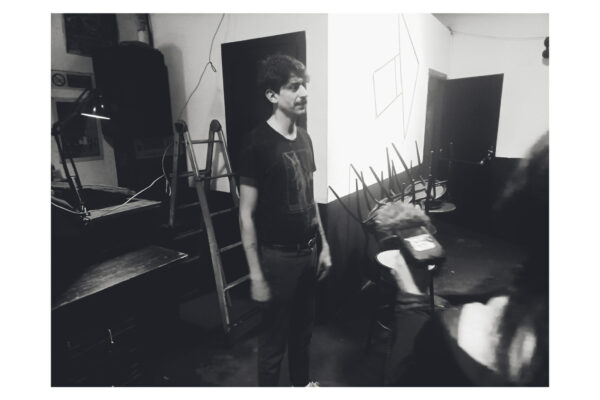
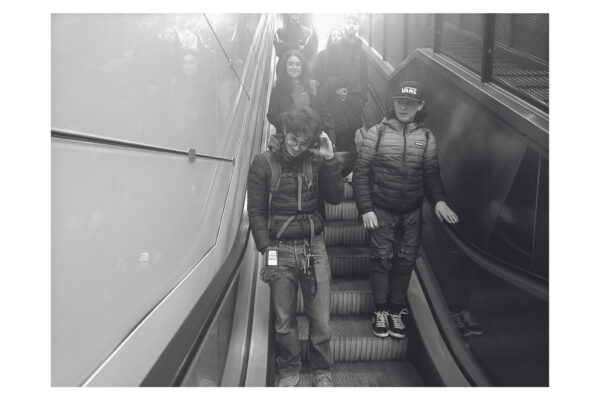
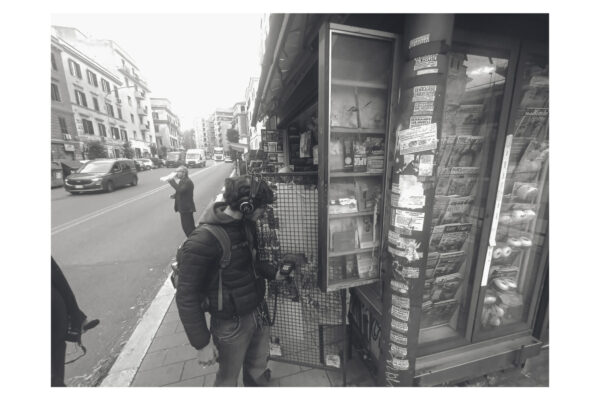
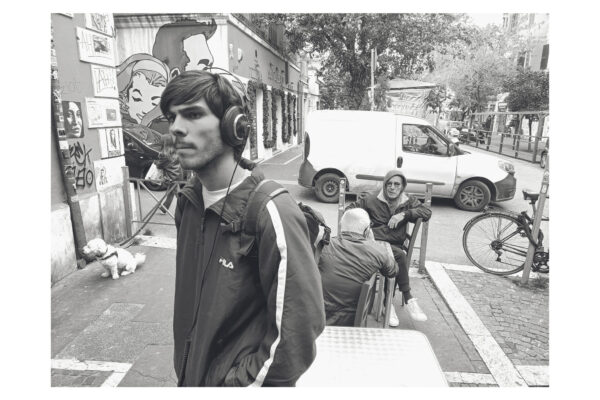
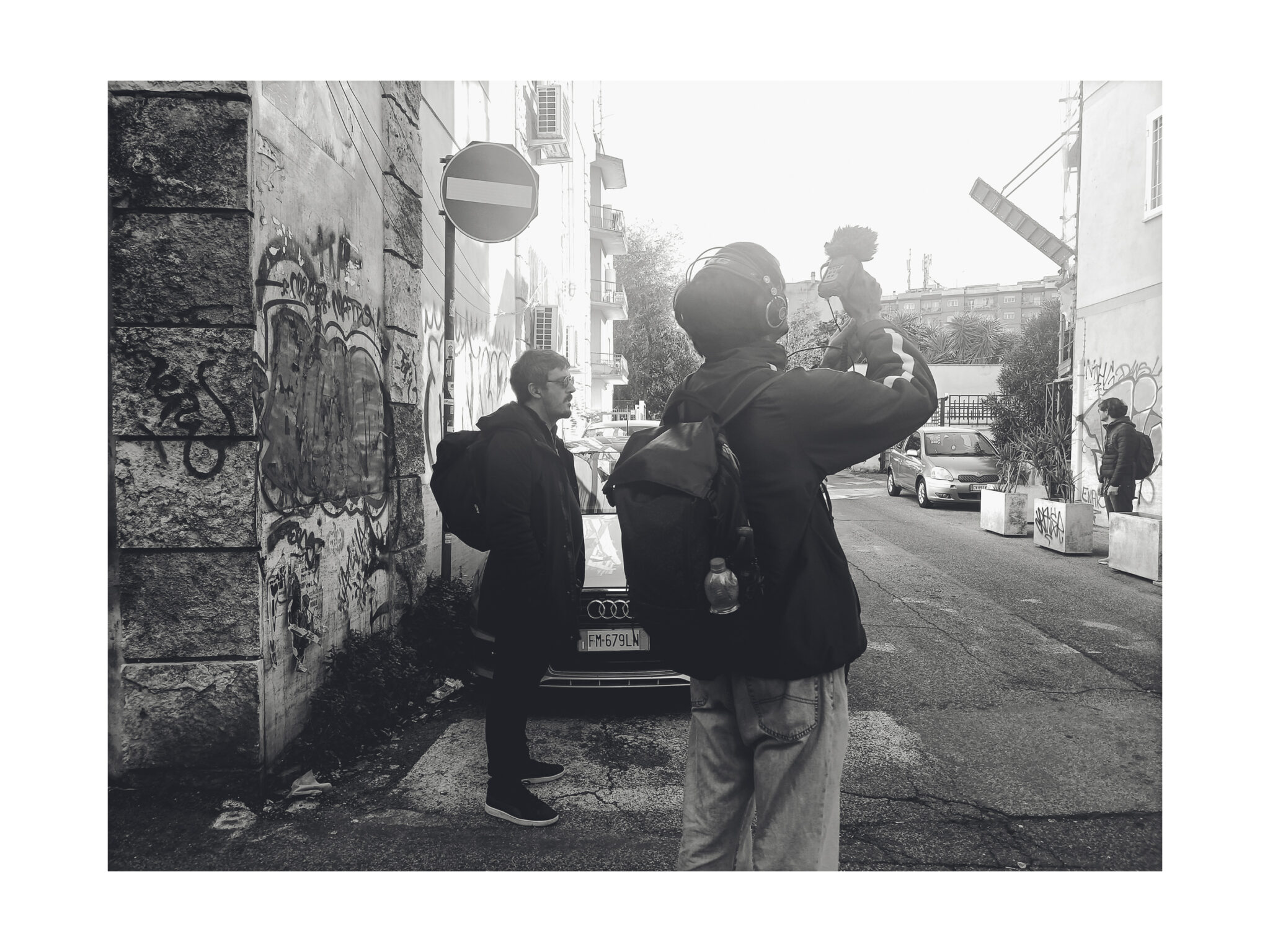
On November 23, 2023, I had the honor and pleasure of leading a group of people (enthusiasts and students) as part of the “Gentrify This” project, a full immersion in the ecology of sound lasting about 6 hours, aimed at exploring the phenomenon of gentrification in the Pigneto neighborhood area of Rome using it as the soundscape. What follows is a non-exhaustive account accompanied by a selection of audio recordings, some music tracks and interviews.
The project was made possible thanks to the valuable collaboration with Circolo Arci metro Core and Matteo, whom I thank, the constant and invaluable availability of my friend lecturer and curator Caterina Tomeo who kindly involved a group of her students from Rufa, Rome University of Fine Arts. Their participation added a variety of perspectives and creative contributions that enriched the experience.
The working group consisted, in addition to myself, of Marco Valerio Luciani, Benedetta Marino, Riccardo Tartaglini, Paolo Rucci, Alessandro Battaglia, Micol Gelsi, Beatrice Resta, Stefano Bonifazi

Let us start by making things clear right away, this is not a scientific work. It needs to be said so as not to give the idea it is a work based on a sequence of audio data extrapolated and compared for the purpose of being able to draw conclusions that are universalistic in nature or from which some kind of scientific certainty can otherwise be inferred.
This is not the case here. The reason for this lies in the fact that the workshop experience was limited (deliberately and for reasons of expediency) to a time span of only 6 hours, and like all phenomena that change over time, the analysis of the soundscape of this area would have required several “stakeouts” repeated over days and days, months, seasons, years, and so on. In fact, only in this way would it have been possible to carry out a comparison that was substantial from a quantitative point of view and qualitatively meaningful in order to discern any differences and fluctuations between the archived data (the sound recordings).
What was achieved, however, served to open a debate among the participants and a reflection on the very broad topic of gentrification in large cities with a more attentive focus on the element of the soundscape; a phenomenon, this one of gentrification, that does not proceed in a linear fashion but, in any case, advances inexorably.
The phenomenology of recorded events would seem to suggest that the issue can be approached by dividing it into two main themes:
On the one hand, the mere acoustic issue, where the dynamic dimension of what was originally a vast area of pine trees, hence its name (pigneto precisely), is clearly crushed by the typical “low-fidelity” configuration of these cluttered metropolises, where the signal-to-noise ratio tends to flatten out, crushing the dynamics and giving us a continuous background buzz, a “tonic,” as Schafer puts it, that one would gladly do without because it is always insidious to the human ear and limits our ability to distinguish weaker sounds below a certain threshold in decibels. Perhaps it goes without saying to reiterate this but we are obviously talking about noise pollution.
On the other hand, it is to consider the more anthropological issue and the social dimension of the gentrification phenomenon that manifests itself here in a curious Leopardesque mix made up of accounts of people and characters currently living in the neighborhood, outlining a difficult coexistence encapsulated within the testimonies collected.
In short, it seems that the exponential growth of commercial activities, the building speculation linked to the increase in tourism, have not completely wiped out the pre-existing dynamics of life, but have nevertheless dealt a very hard blow to the social and urban structure of an originally working-class neighborhood to which capitalism slowly tries, year after year, to change the intended use, evidently succeeding.


Some of the most interesting elements of our little soundwalk in Pigneto concern the testimonies of some managers of historic businesses. Basically survivors in the midst of a thicket of brand new establishments that are more or less trendy and form the core of the self-styled movida. Sort of what happened to the San Lorenzo neighborhood years earlier.
During the interview, the old baker of the area confesses, yes, that he has increased his clientele a great deal over the years as a result of the neighborhood’s transformations, but that he has also had to turn his simple bakery business upside down into a sort of take-away equipped with ready-made meals, first courses, main courses and side dishes along with the “simple” baked goods of yesteryear. This in itself did not bother him of course, but he realistically considered the increasing work complications due not only to an increase in customers over the years but also to a transformation in the very target audience of the typical customer. No longer just residents but also students, tourists, passersby, of everything.
However, a certain popular dimension of the neighborhood endures in hybrid forms, mixing with the new creating areas of partial gentrification. Think of the fruit and vegetable market in the midst of the nightlife venues. Of course, these are activities no longer carried out by Romans, in fact, according to a report, now dated 2018, titled “The (poor) devil hidden in the detail” by two independent journalists, Maria Panariello and Maurizio Franco, in 2017 33 Roman fruit stores closed, but were replaced by those run by foreigners and for this reason these types of stores and street activities become the first form of investment of these communities. In essence, the fruttarolo de Roma has not existed for some time now.
How this specific aspect affects the soundscape of the pigneto is not known to us since it is already an acquired phenomenon, but it is an element that together with the constant and continuous opening of new businesses (mostly related to the evening movida) confirms a disengagement of residents from the neighborhood.


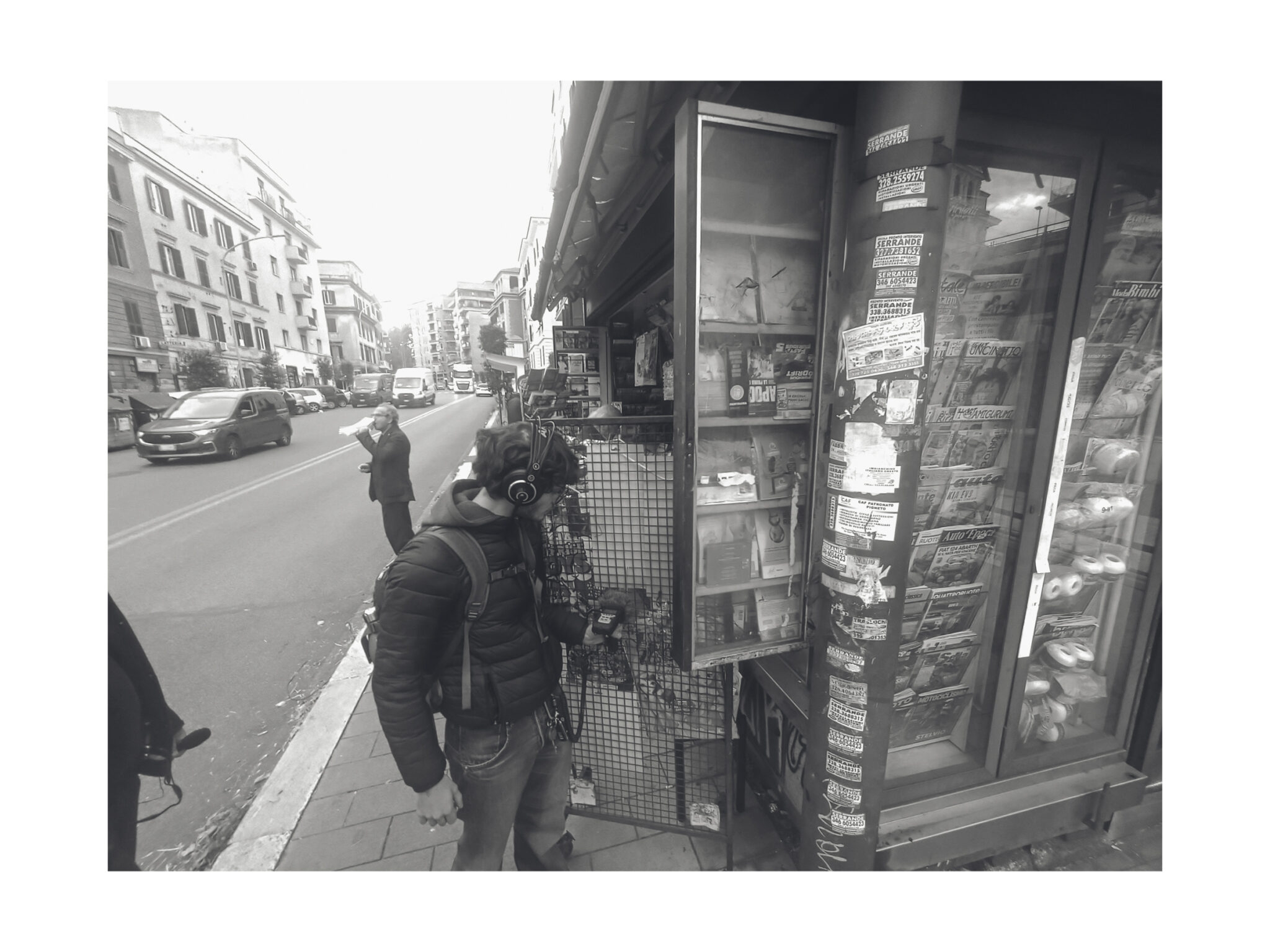
In one of our interviews with residents, a bookseller talks to us about property speculation in the neighborhood. She does so in about twenty minutes with a lucid and timely analysis of the events of recent years related to the pigneto. Confirming this there is a study conducted by the Department of Economics at the University of Rome Tor Vergata examined data on real estate prices and businesses in the neighborhoods served by Line C of the Rome Metro. The data were collected between 2017 and 2022. The study found that property prices in the neighborhoods served by Line C have increased by an average of 20 percent over the past five years. The study also found that traditional businesses, such as grocery stores and bars, are closing in favor of new services and high-end facilities.

Line C of the Rome Metro was built in part with the aim of revitalizing working-class neighborhoods located in the eastern suburbs of the city. The line should improve the mobility and accessibility of these neighborhoods, making them more attractive to tourists and new residents. However, some experts fear that the construction of the C line may accelerate the gentrification process in these neighborhoods, exacerbating existing social inequalities.
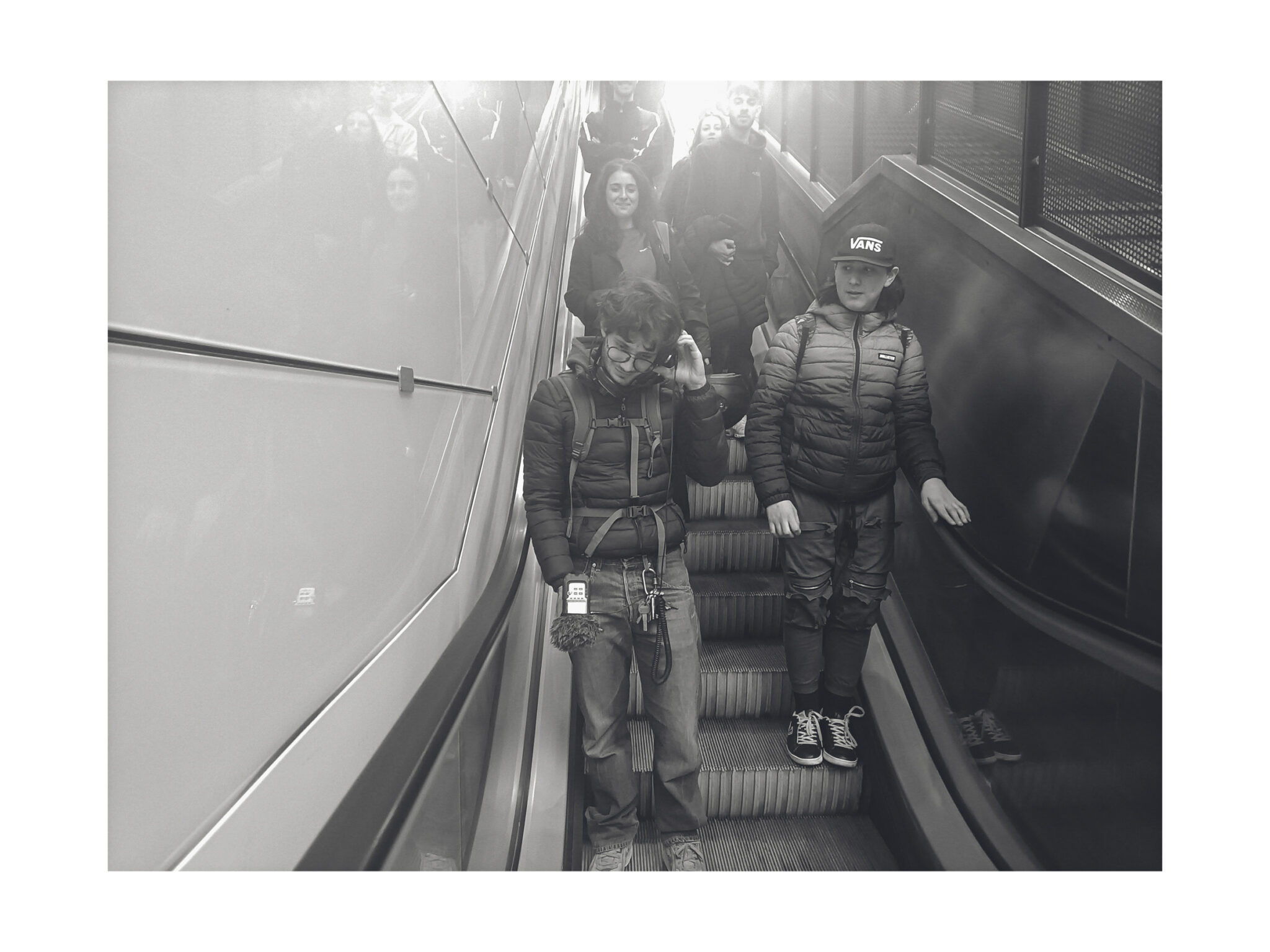
As we walked down the stairs to the entrance of the metro inevitably my thoughts went back 11 years, when I was struggling with the making of Metrophony a record focused entirely on the soundscape of the metro B section of Rome, at the time the C was still under construction. The record had purely experimental value for me, yet I was able to detect an element of static in a context of apparent dynamism (such as the interior of a subway car might sound like). A continuous tonic hovered throughout the 40-minute track, made up of puffs, the sound of rails, automatic doors opening, people’s voices in the background; examining the context more deeply, it was clear how the dynamic elements were constantly repeating themselves, effectively nullifying their changing nature to bend to a logic characterized by an almost robotic precision, with factory conveyor belt timing. The thought goes directly to “Un pezzo, un culo” to quote the legendary Gian Maria Volontè in “The Working Class Goes to Heaven.”
Personal digression aside, the reflection that I would like to point out is that large industrial works within the urbe bring inevitable disastrous consequences from an acoustic point of view, as well as in relation to the annexes and annexes of gentrification from a social point of view.
Is this not, however, the crux of the issue of gentrification? An initial and only apparent improvement, a classist gentrification that improves the services of an area in an instrumental way with speculative intent planned but unveiled little by little so that those who live in the neighborhood become aware of it when the fact is accomplished.

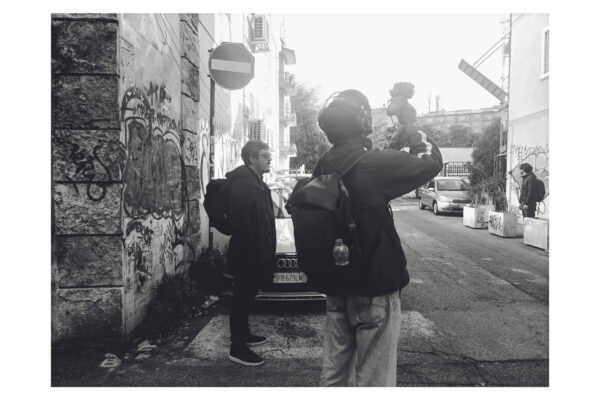
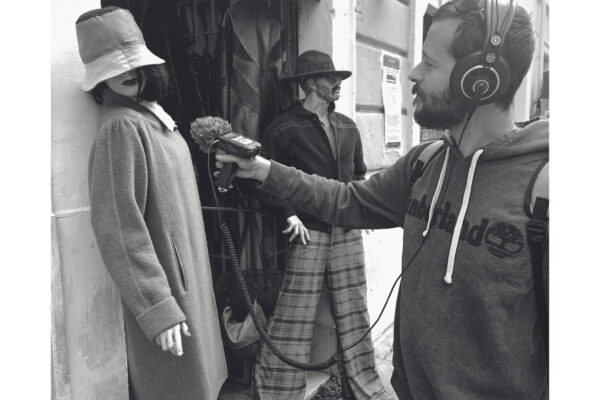
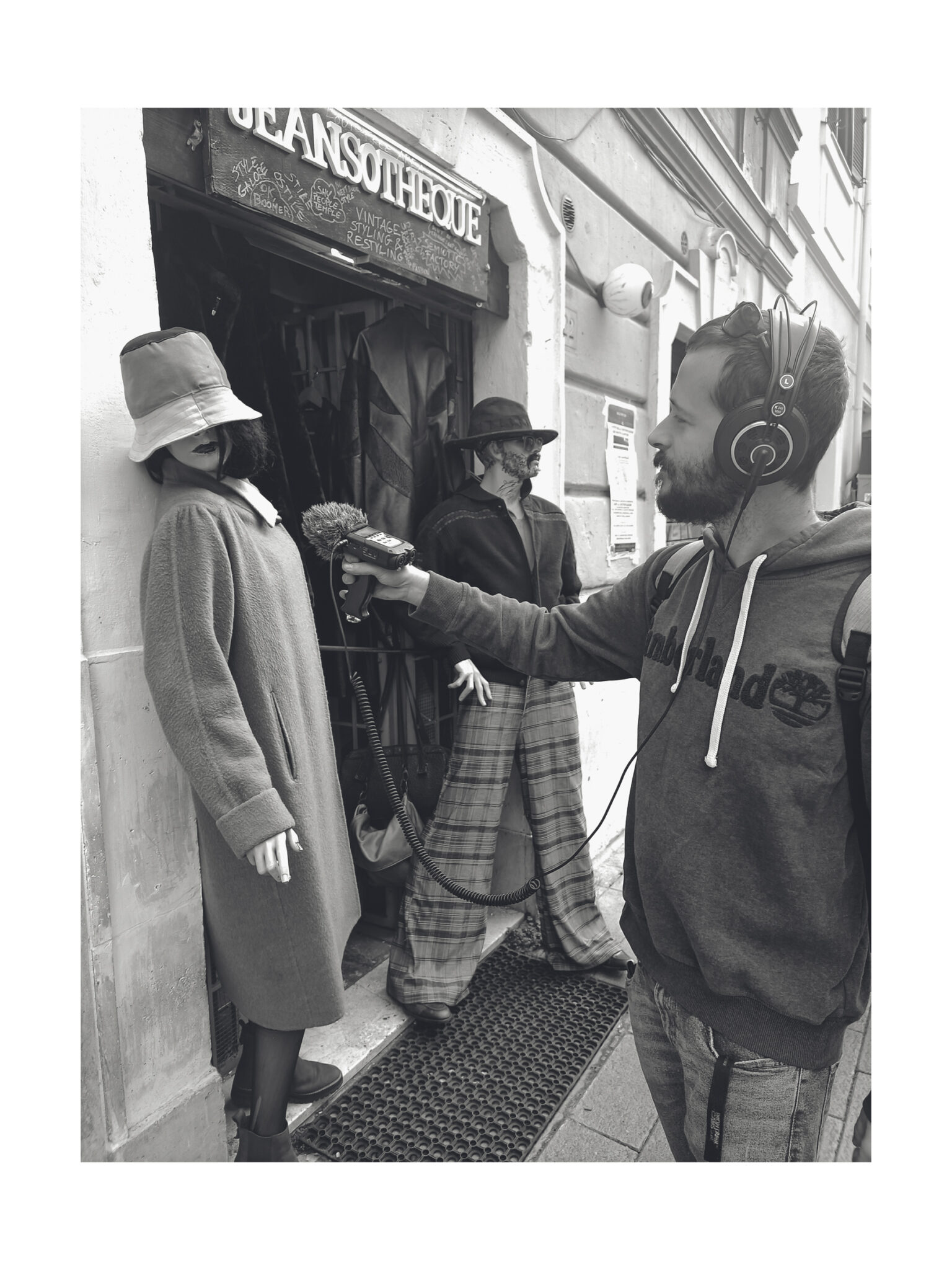
We had just a few minutes ago concluded a nice and comprehensive chat with the bookseller (listen to the audio player above) when we come across this strange business establishment. Apparently everything is closed but it is because of the time of day, it is 3 p.m. or so. The owner is inside but has locked himself in with some kind of metal bar. It doesn’t completely block the passage but the concept is clear. All of a sudden he comes out with a cigarette and a power socket, probably in need of repair, on his shoulder (as pictured). When I saw him I knew right away that we were about to get a great dissertation on the concept of gentrification but not only. The gentleman in question is a tailor but he specifically sells vintage clothing and apparently has a very diverse clientele.
All gossip aside, I invite you to listen to it because it is an opinion that on the surface expresses sharpness with respect to the gentrification phenomenon but I find that ultimately it is a position that “stands in the middle” of many things. And perhaps it could not have been otherwise. Certainly it is a different opinion from that expressed by the bookseller in the previous “chapter.”

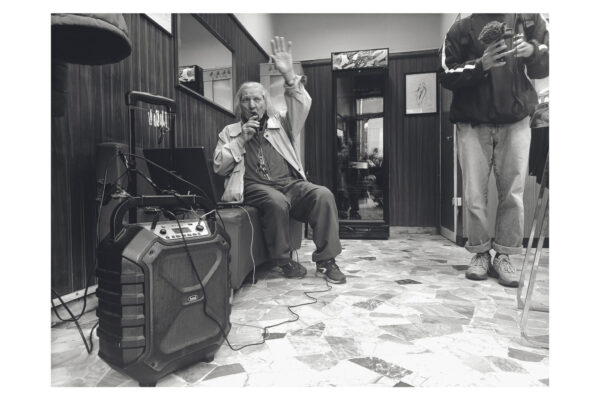
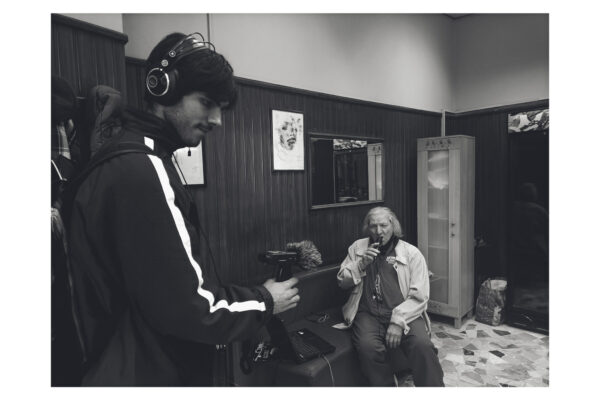
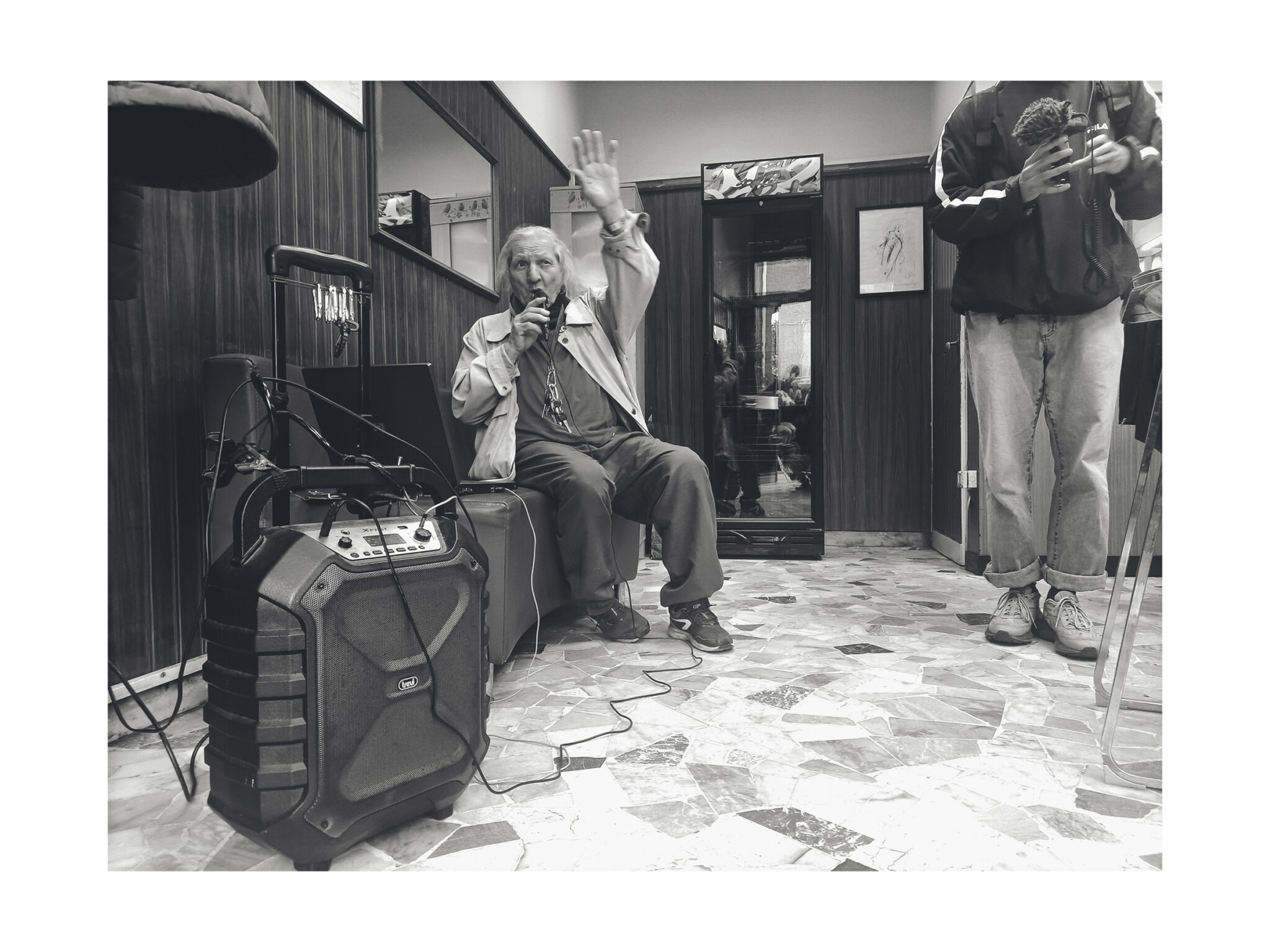
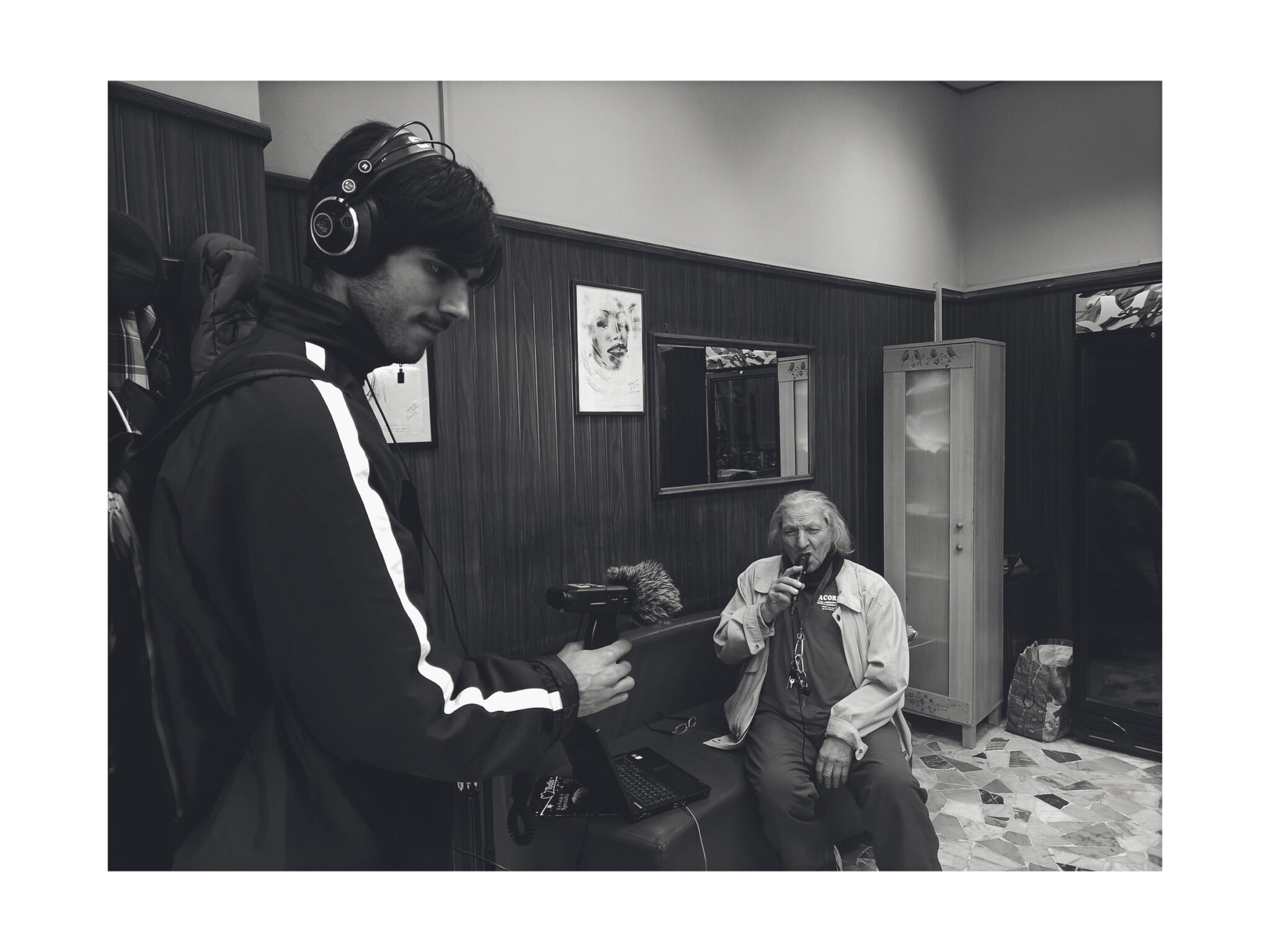
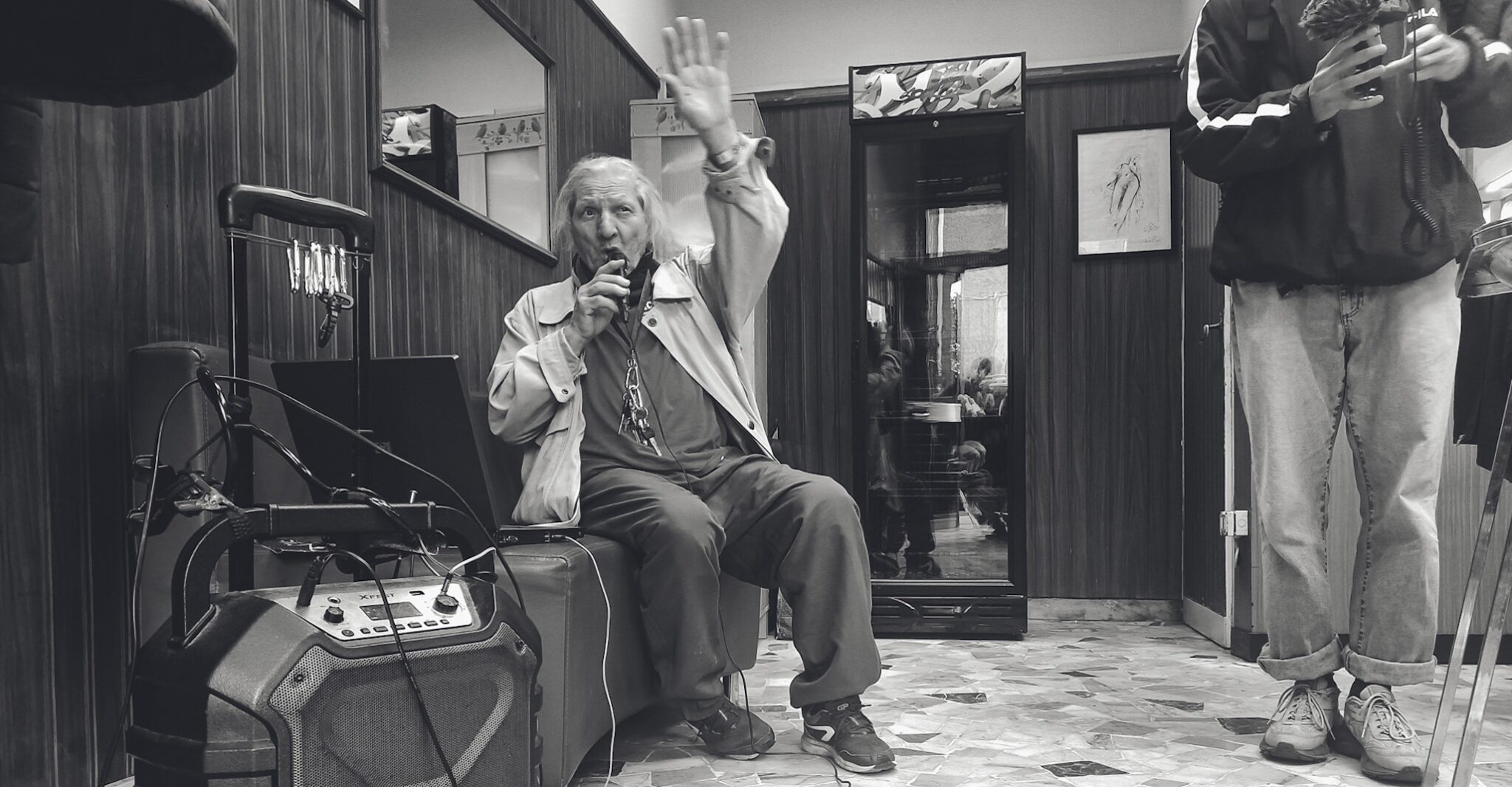
While recording between Necci (a famous aperitif place in the area) and the Fanfulla arci club, we come across an old barbershop set up like those of yesteryear. the furnishings, the signs, everything has stayed put inside, even the clientele seems to consist of a curious gentleman far beyond his years very taken with his microphone and portable karaoke box as he sings Don Backy’s L’immensità in his own way. The recorders immediately go peaky, the volumes are crazy, the tonics no longer make sense, the sound signals and sound markers neither. Gentrification didn’t come through here, and if it did, it must have thought it had the wrong address.

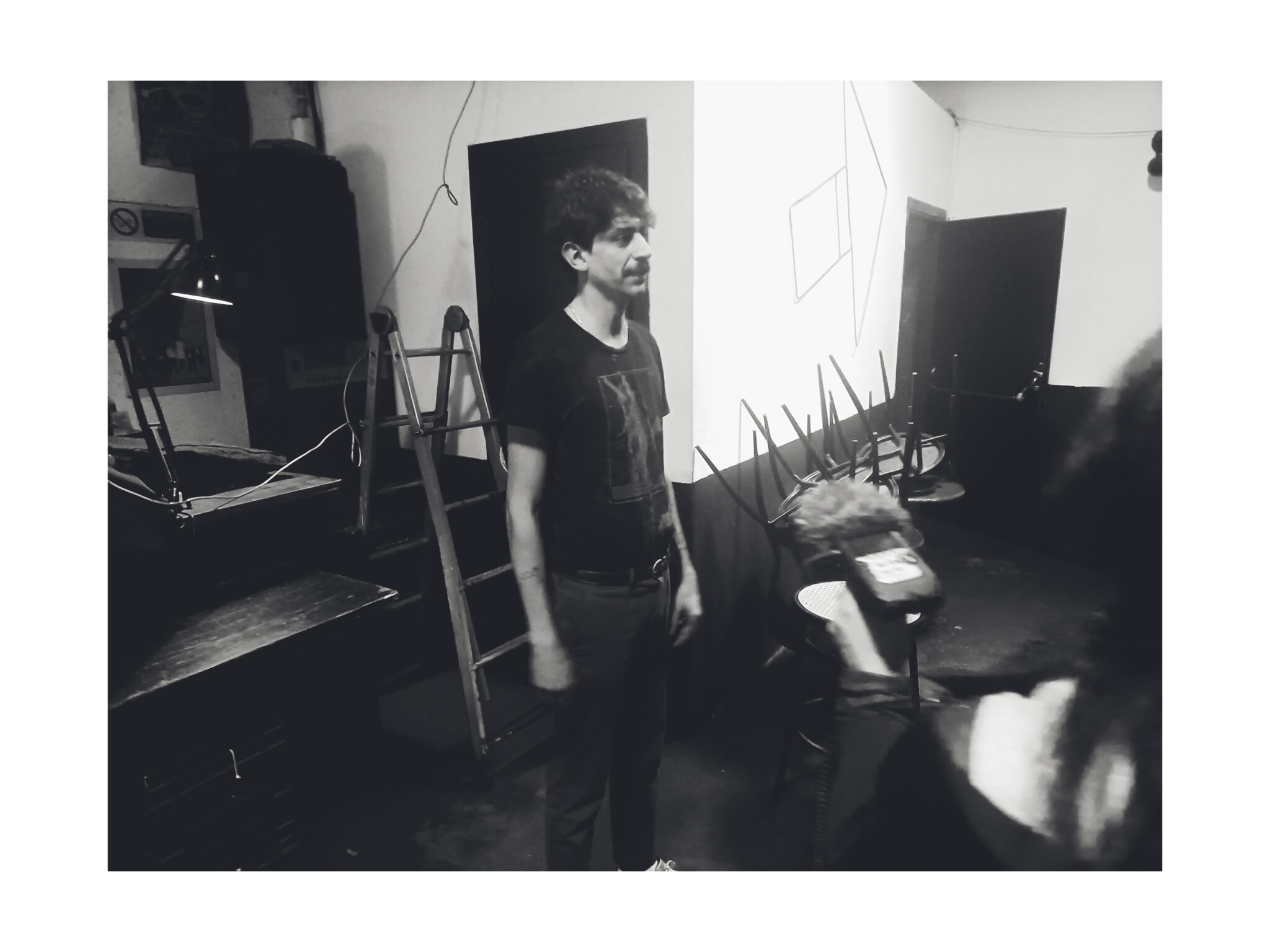
Fanfulla is one of the historical Arci clubs in Pigneto. It has changed shape and location over the years but continues to accustom those who visit it to an always interesting musical proposal. I think I played there more than 10 years ago, it was a bit bigger back then but it is nice to see that it still holds up. We ran into two guys from the circle in the afternoon who were working for the evening concert. We asked them the favor of telling us a bit about the past and present of the circle and their personal opinion on the evolution of the neighborhood from a vantage point.
Below you can listen to some tracks I made by reworking the collected audio samples. The first 3 are made by me, the fourth is a contribution from my friend Stefano Bonifazi.
In Pigneto part 1 by Francesco Giannico
In Pigneto part 2 by Francesco Giannico
In Pigneto part 3 by Francesco Giannico
ER PUPAZZISMO DE PIAZZAMMERDA by Kilroy aka Stefano Bonifazi
Some signifivcative samples
We couldn’t miss a final talk where with all the participants we put together some reflections that had matured during the day-long workshop. I think it is an extremely interesting audio file to listen to because it offers different points of view (or it would be better to say listening).
Click to enlarge photo